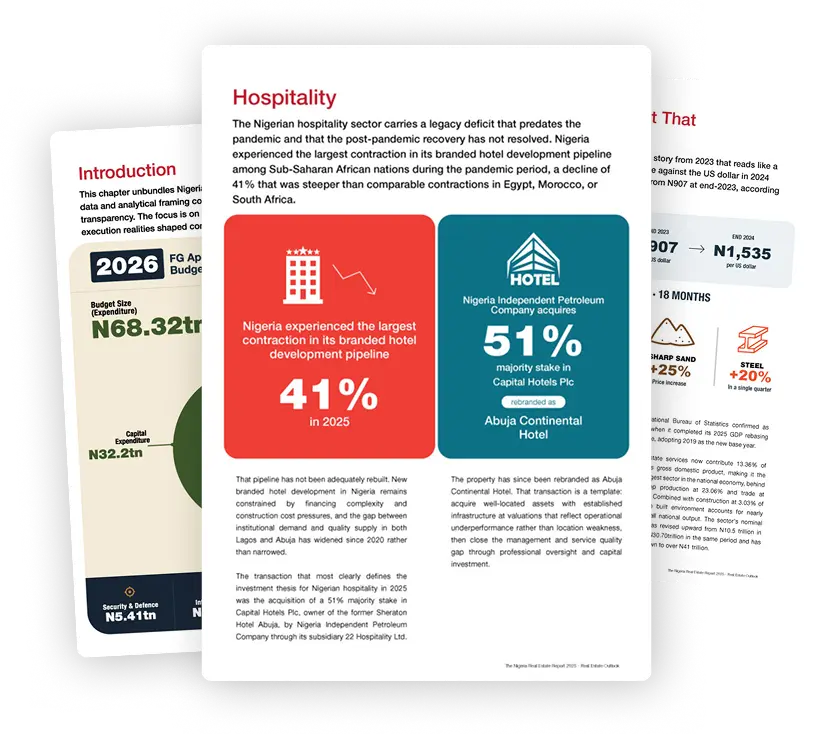
Get a simplified breakdown of Nigeria’s 2025 national budget understand how allocations, capital spending, and policy priorities will shape the economy.
With a housing deficit exceeding 20 million units, rapid urbanisation, and population growth, residential demand remained strong despite affordability challenges
Road, rail, and transport corridor developments were the primary drivers of land appreciation and investment decisions.
High interest rates, low mortgage penetration, exchange-rate pressures, and rising construction costs slowed project delivery and encouraged phased developments.
E-commerce growth, supply chain expansion, and infrastructure investment drove strong demand, occupancy, and rental growth for warehouses and industrial parks.